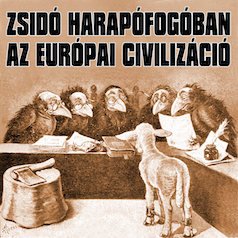
The readers of our website are well acquainted with Szilárd Csonthegyi’s thorough works, which cover every important detail. We are pleased to announce that readers will now be able to explore the author’s ideas in a comprehensive, three-volume trilogy. On this occasion, we spoke with Szilárd Csonthegyi. An in-depth interview follows.
– It has been eleven years this year since Hungarian readers have been able to read your writings on our news portal. Over the years, you’ve written numerous in-depth studies and analyses, which may have led some readers to think that such material would be better suited for a book. Publishing a book, however, is not an easy task, especially on this topic and at this length. How did this develop?
– As a researcher and writer, one quickly learns the importance of documenting all valuable source material—books, articles, videos, anything—so a few years ago, while browsing through archives and documents that are now available online, I came across a great deal of highly important material. Among these were the extensive collection of Franz Boas, a pioneer of cultural anthropology, in the American Philosophical Society Digital Library, or the archives of the University Library of Frankfurt am Main containing the surviving materials of Max Horkheimer, an ideologue of the Frankfurt School, which include true rarities such as memoranda, correspondence, drafts, postcards, and telegrams in German or English—sometimes in a worn, barely legible condition. The archives of the American Jewish Committee also contain numerous important—and sometimes formerly confidential—documents. In addition to these, there are materials from other archives that I have painstakingly examined, having read through and taken notes on many thousands of them, as well as a number of academic rarities. For the most part, I have never seen these materials analyzed anywhere, especially not from a Jewish-critical perspective.
In early 2023, Kevin MacDonald, author of the 1998 classic The Culture of Critique, announced on his website that he was in the process of revising his work for a new edition. This work includes an important chapter on Boas. Since MacDonald had published most of the revised chapter, and I did not see any of the significant material in it that I just referenced above, I felt that it was my responsibility to share with the professor these documents that I had previously examined, which often included introductions, contexts and comments, as well as links to everything. Subsequently, I shared many other materials with him, whether on the topic of immigration, the Frankfurt School, or relevant subjects. MacDonald then incorporated some of this into his work, which has now been significantly expanded with new additions, further strengthening the important material. It was published by the American Antelope Hill Publishing in 2025. Due to my contributions, I was honored to be included in the book’s acknowledgments alongside such scholars as Andrew Joyce and Brenton Sanderson.
Basically, the idea of sharing something in English with an audience that does not speak Hungarian had been on my mind for some time, especially because of the exclusive material I had not encountered anywhere else. This opportunity arose with the reissue of the classic work When Israel is King (2024) by Antelope Hill, written by the French brothers Jérôme and Jean Tharaud, which serves as a chronicle of the Republic of Councils of Hungary. I already had some notes on the period, so I wrote a lengthy piece on the subject loosely centered around the book, which MacDonald published on the online outlet The Occidental Observer and the print journal The Occidental Quarterly. Since I had just written a substantial 81-page piece in English, and MacDonald also encouraged me to write a book, I decided to compile a comprehensive study on the topic I had been analyzing for years. I had plenty of material to work with, both in terms of theory and source material. After a highly complex and labor-intensive process, the work was finally completed.
The three-volume set is being published by Antelope Hill Publishing, which has previously republished classic works related to Hungary, such as the aforementioned book by the Tharauds, as well as the second volume of Cécile Tormay’s classic Bujdosó könyv (An Outlaw’s Diary: The Commune [2020]), which was originally published in English in 1923. My book takes its place alongside these and other rarities, or works of historical significance, as well as books by prominent contemporary scholars such as Kevin MacDonald and Ricardo Duchesne. For now, the book is available in paperback, but digital and hardcover editions are also planned for later.

– How should we envision the structure of the entire work? As a conceptual study, it surely has a well-developed composition.
– The book that has just been published is the first volume of a trilogy. The second and third volumes are expected to be published in the coming months (due to significant delays in the publication of the first volume, I dare not make a more precise prediction). All three volumes are nearly 600 pages long. To summarize, the work’s three volumes comprise twenty-five chapters, which are organized into nine thematic sections. The first volume also includes a foreword by Kevin MacDonald. In addition to the shorter afterwords and prefaces, the work also includes a longer introduction (in the first volume) that articulates the thesis and places it in its historical context, as well as an extensive afterword (in the third volume) that presents additional material and concludes the study.
Essentially, the work is one lengthy study, but all three volumes stand on their own, so each one actually offers a comprehensive read in its own right, should a reader be interested in only a specific topic. However, all nine parts are situated in a more complex and comprehensive theoretical and thematic context, which adds important layers to the examination of each topic. Since these topics are not randomly chosen but rather are parts of an interconnected historical analysis that outlines a process, each volume is connected to the others to some extent—as evidenced by the occasional cross-references—so it is worth exploring the entire series as a whole.
It would be helpful to summarize the trilogy in broader terms and then break down the individual volumes.
– The book’s title is Warfare Through Manipulation: Group Conflict Between Jews and Gentiles. Regarding the title and theme, two points may be emphasized. First, we are not simply talking about deception, but about manipulation, which can be multilayered—for example, the manipulation of demographics or cultural memory is not mere deception, but rather a manipulative act of reshaping or reframing. The other key element is that it is the characteristics of these groups that clash. The study endeavors to delineate the contours and boundaries of these groups, as well as their intersecting points of conflict.
The fundamental basis of this study’s thesis is a race realist, sociobiological—evolutionary—approach. According to this approach, human groups developed relatively separately—and at times very separately—for tens of thousands of years, resulting in shifts in characteristics due to specific climatic, religious, and social contexts. For example, the challenges posed by northern frosts and cycle of seasons, or by the climatic and other conditions of the Middle East, will logically shape the average characteristics of different groups in different ways over the course of millennia. In light of this, religious considerations play no role in the analysis; the Jewish question is not viewed as a creation of Judaism—here, Judaism itself is a creation of the Jews. Religion and culture appear here as manifestations of ethnic character (see Part I, Chapter 3).
Just as an individual has a character, so too can this be observed in groups. A central tenet of the work is that different ethnic—or racial—groups possess relatively distinct characters, significantly influenced by biological factors, as a result of their historical development (let us call it their evolution), and these different characters, along with the associated biases, tendencies, mentalities, and conflicting interests, logically and naturally lead to conflicts. This is what I call group conflict, for which the character shaped by genetic influences thus provides an important foundation.
While acknowledging the natural existence of individual exceptions that deviate from the group average, this is seen here as a group-level conflict that has been observable throughout history—spanning several millennia—and whose defining characteristics can be identified. My study documents and analyzes several of these, linking their impact to the present day, as it is important to recognize that this group conflict is a living and active phenomenon. Zionism with its resource-parasitism (in the West) and its violent manifestations (in the Middle East), for example, is one aspect of all this and it is particularly relevant today. The differing interests, conflicting biases, and characteristics of these groups thus manifest themselves in a very diverse range of ways on the stage of history (such as politics, culture, etc.).
Mentioning positive group characteristics (precise Germans, passionate Italians, orderly Japanese, etc.) is politically correct, but in the case of negative traits, an extraordinary taboo has weighed heavily on the subject (as a result of Jewish activism, which I demonstrate). Talking about the musical talent or desire for freedom among Gypsies does not cause anyone to blush even in liberal circles, but even supposedly radical movements or parties rarely dare to speak of Gypsy parasitism or violence, even though the example of many nations’ centuries-long coexistence with this ethnic group would provide serious grounds for doing so. Similarly, biological and psychological studies confirm that the Gypsy’s lower intelligence and behavioral traits (lower impulse control, higher testosterone levels, etc.) constitute a combination that reproduces this character, regardless of whether they live under feudalism, capitalism, Communism, National Socialism, liberal democracy, or any other political system (see Csonthegyi, 2019). The same applies to other groups with their own distinctive characteristics—such as the Jews.
According to Isaac (Isaak) Heinemann, a rabbi from Germany and professor of classical literary history, ancient anti-Semitism was more political than religious in nature, because it typically took issue with the Jews as a source of power and influence. Heinemann identifies three such focal points of conflict (Konfliktsherde; or, in a modern form, Konfliktherde) in history: the Syrian-Palestinian, the Egyptian, and the Roman. My study adds a fourth focal point to this, which can be traced back roughly to the era following the Enlightenment or the Industrial Revolution and largely spans the past approximately 200 years, while also occasionally taking a look back to ancient times. This fourth focal point is the conflict between White Europeans and Jews in the Western world, which has had numerous profound manifestations—often in ways that are not immediately apparent to the casual observer. To such observers, Bolshevism was merely the work of the Bolsheviks, feminism that of the feminists, and so on. The aim of my study is to explore in detail—spanning multiple periods and topics—the group-based nature of this conflict using the tools of sociobiology, behavioral genetics, psychology (and more specifically, evolutionary psychology), political science, sociology, literary history, and relevant approaches.
At the heart of this conflict lies a struggle (or warfare) stemming from the shifts between group identities and the resulting traits, identities, and, ultimately, interests. The goal of these struggles is cultural and political dominance, as well as control over resources. If a group fails to ensure the preservation of its own traditional character and the security of its living space that safeguards this (for example, by defending its dominant role on an ethnic level), then that group will evolutionarily disappear—in terms of identity, homeland, and ethnicity alike. The group conflict examined in this study centers on Jews and White gentiles. Although other conflicts involving Jews with other groups are explored as well (such as those with the aforementioned Middle Eastern peoples), this study focuses primarily on this particular conflict.
The first volume is subtitled Foundations and Strategies and consists of three parts. Following MacDonald’s foreword and an introduction outlining the historical and scholarly context, the three chapters of Part I lay out the foundations. It is important to describe the two main groups of the titular conflict; thus, the genetic and psychological profile of the Jews are presented, contrasted with that of White gentiles. It is also important to establish a foundation for what we mean by “Jewish influence” or “Jewish power,” as this serves as a recurring point of reference. All of this must also be demonstrated in a more empirical manner. Furthermore, it is important to show that, despite internal differences—religious or secular, conservative or liberal, etc.—we can still speak of “Jews” as such. Specifically, we are not merely examining “Zionist,” “Bolshevik,” “liberal,” or perhaps “globalist” issues, but can speak specifically of a Jewish issue in connection with the conflict under analysis, regardless of how it manifests itself in history.
The second part of the first volume then analyzes the Bolshevik era, though here too the emphasis is on the Jewish role—specifically, how Jewish strategic considerations manifested themselves within the framework of the state power apparatus governing individual White nations, and how all of this clashed with the interests and character of the White group. The focus remains on group conflict, examining it from multiple angles through the events of this fascinating and unique era.
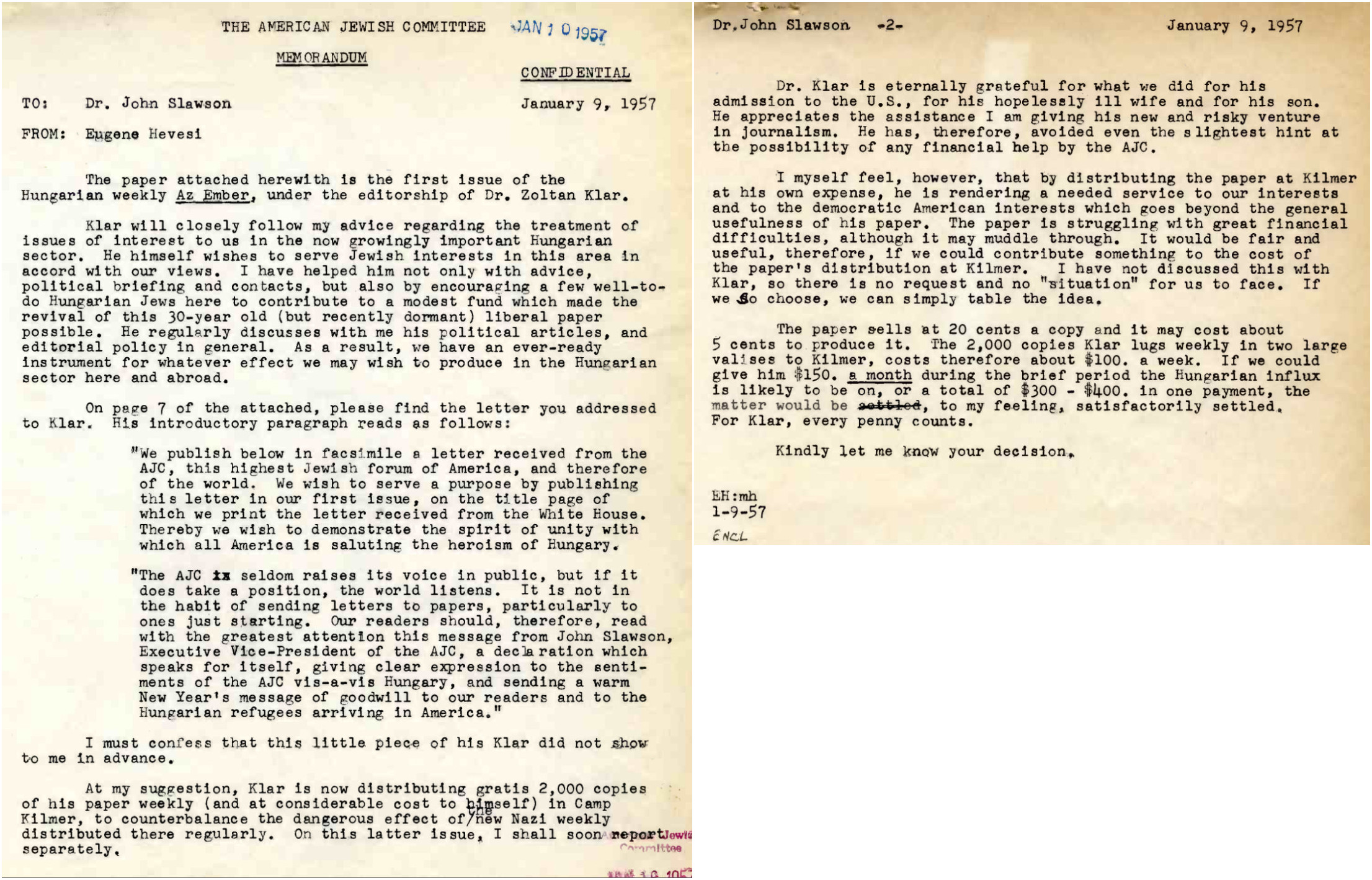 Among the American Jewish Committee’s documents related to the events of 1956, the above report—once classified as “confidential”—mentions a relaunched Hungarian-language newspaper that the AJC would now manage behind the scenes. The paper was to be distributed primarily among the 1956 refugees, thereby undermining the influence of Marschalkó’s newspaper, Hídfő, which was banned due to Committe lobbying (as revealed by other documents in the file). The contents of the file are discussed in Chapter 5 of Volume I. |
Part III addresses the demographic situation, where the clash between Jewish interests and those of the White group is no longer manifested through state violence but rather in the realms of academia, politics, and culture—with, if anything, even more catastrophic long-term effects. These two lengthy chapters, drawing on numerous exclusive archival materials, illustrate how the White man’s racial self-defense shifted toward multiculturalism—and, of course, the extent and nature of the Jewish role in this process.
The subtitle of the second volume is Identity and Corrosion, and its central focus is the Jewish influence on the White gentile’s self-image and on their cultural—or, for example, through architecture, their physical—living space. This volume continues with Part IV, which analyzes themes related to the arts, architecture, literature, music, film, and cultural memory, and their identity-forming—or identity-eroding—effects. In addition to the roles of beauty, space, and historical self-image, the analysis also addresses contemporary pop culture—or, more precisely, the Jewish role found there and its impact on the host populations. Part V examines the far-reaching implications of the Freudian influence, ranging from the degeneration of liberalism—into today’s neoliberalism—to the impact of the Frankfurt School’s critical theory. This is a highly instructive and wide-ranging topic, and the processes examined therein continue to exert a significant and decidedly harmful influence on the world of White people to this day. Chapter 12 contains the most comprehensive Jew-critical analysis to date on the Freudian Budapest School of Psychoanalysis.
Part VI then examines the impact of more contemporary academic and cultural subversion grounded in Freudian and Frankfurt School theories—as well as more directly anti-White currents (such as Whiteness Studies, etc.)—from a distinctly moral (or, more precisely, moral-cognitive) dimension. Influencing the moral orientation of Whites is an important aspect of group conflict. Part VII is centered on the theme of the Holocaust, analyzing primarily its elements that affect identity, whether it is through legal activism (hate speech laws and the Jewish element underlying them) or by the shaping of self-orientation within historical frameworks. The almost metaphysical nature of Imre Kertész’s “post-Holocaust culture” is also analyzed within cultural (literary and cinematic) frameworks.
The subtitle of the third volume is Sexuality and Patriotism. The central theme here is the examination of two elements that are evolutionarily crucial and deeply instinctual. Both sexuality and the more territorial, tribal form of patriotism, are important driving forces among mammals; therefore, it may be interesting to examine how, through the influence of human moral, cognitive, and narrative perspectives—as well as the deployment of cultural and political power—such evolutionarily important elements can be exploited in harmful ways during intergroup conflicts.
In this volume, we continue our examination in Part VIII. This section provides a comprehensive overview of the battlefield of gender and sexuality, taking into account the dynamics of group conflict. It may be of interest to note that while feminism was a predominantly Jewish phenomenon during its second wave, in Hungary the first wave already exhibited the Jewish characteristics later seen elsewhere (opposition to hierarchy, internationalism, anti-male sentiments, and sexual deviance, etc.). There was no second wave due to the Soviet János Kádár era, but Hungary’s feminist movement immediately joined the third wave—specifically its Jewish theoretical and activist strand—with the onset of the liberal-capitalist era. In my case study in Chapter 17, which opens the volume, we learn about the activism of Rózsa Schwimmer-Bédy, Vilma Glücklich, and numerous others, and this is synthesized with the other two waves on an international level. This Part also includes an analysis of Jewish efforts aimed at normalizing sexual aberrations and using deviants as a tool, as well as the role Jews played in the realms of pornography and moral degeneration. These are all up-to-date.
The concluding Part IX examines patriotism; specifically, the hijacking of White patriotic sentiment, primarily in connection with the geopolitical transformations in the Middle East following the “war on terror” after September 11, 2001 (lasting to our day), though the example of World War II also inevitably comes up. Here, several chapters explore this topic from multiple perspectives, including a trilogy of chapters that analyzes the Jewish hijacking of what I call gentile responses to certain phenomena. Examples include the Zionist hijacking of the—primarily European—response to Muslim immigration through the so-called “Counter-Jihad” movement of the Tommy Robinson type; the diversion of the religious response through Christian Zionism; and, in the case of the so-called Jewish anti-Zionist movement, the diversion of the response to the pulsating, open-wound that Jewish presence in Palestine–Israel causes, by establishing frameworks opposed to Zionism. We also learn about the ways in which direct and indirect Jewish influence manifests itself in the exploitation of White resources—whether it be money, weapons, lives, blood, or sweat.
The study concludes with a lengthy afterword that includes further material on these topics as well as self-reflection on the study itself. In this afterword, after further reinforcing the theoretical, scientific, and historical foundations of the thesis, we draw the conclusion that the historical—and still active—conflict between the Jewish and the White groups, in this historical fourth focal point of conflict, has been severely harmful to the White race and its nations (to varying degrees) in an evolutionary sense. This conflict is ethnic in nature and can only be resolved at the group level, provided that the White group is still capable and willing to put a stop to this influence in accordance with its ethnic interests. We have seen clashes between ethnic groups in history that ended with devastation, and this story is one of those—with the added complexities of the modern world.
– Your writings are characterized by their reliance on a wealth of source material, and here, too, we can see that the sources play a significant role. What should we know about this in advance?
– Overall, the analysis is based on more than 4,300 sources, combining the materials in the bibliographies and footnotes and excluding duplicates across volumes. Hundreds of these are exclusive materials, and although several of them appeared in Professor MacDonald’s revised work, there remained many important unknown materials that I have now included in my work. It may also be of interest that numerous Hungarian sources are included. Among these we find contemporary academic analyses, which are essentially exclusively philo-Semitic or Jewish works, yet contain rarities and points of interest. Furthermore, historical materials regularly appear, drawn from both Jewish and anti-Semitic sources, which may be of particular interest and unfamiliar to international readers, though I am certain that many of these remain largely undiscovered even by the Hungarian public. For example, the sources I used in my writings on the Budapest School of Psychoanalysis or the first wave of feminism in Hungary are of this nature.
I take pride in being able to dust off the timeless works of Hungarian analysts—many of whom are unknown even to Hungarians themselves—opening a window onto them for some fresh air, shedding some new light on their names. While the names of Győző Istóczy, Zoltán Bosnyák, or Lajos Marschalkó may be familiar to some, those of—among others—Ödön Farkas, László Bachó Dezséri, Fehér Holló, or Titusz C. Kolgyári are perhaps less so. The book also offers points of interest in relation to Kuruc.info, as here and there a reference or quote pops up from figures such as Ottó Perge, Demeter Bistrán, József Hering, Csaba Ilkei, Zsolt Lipusz, or Károly Dobszay, who have also written numerous important pieces over the years.
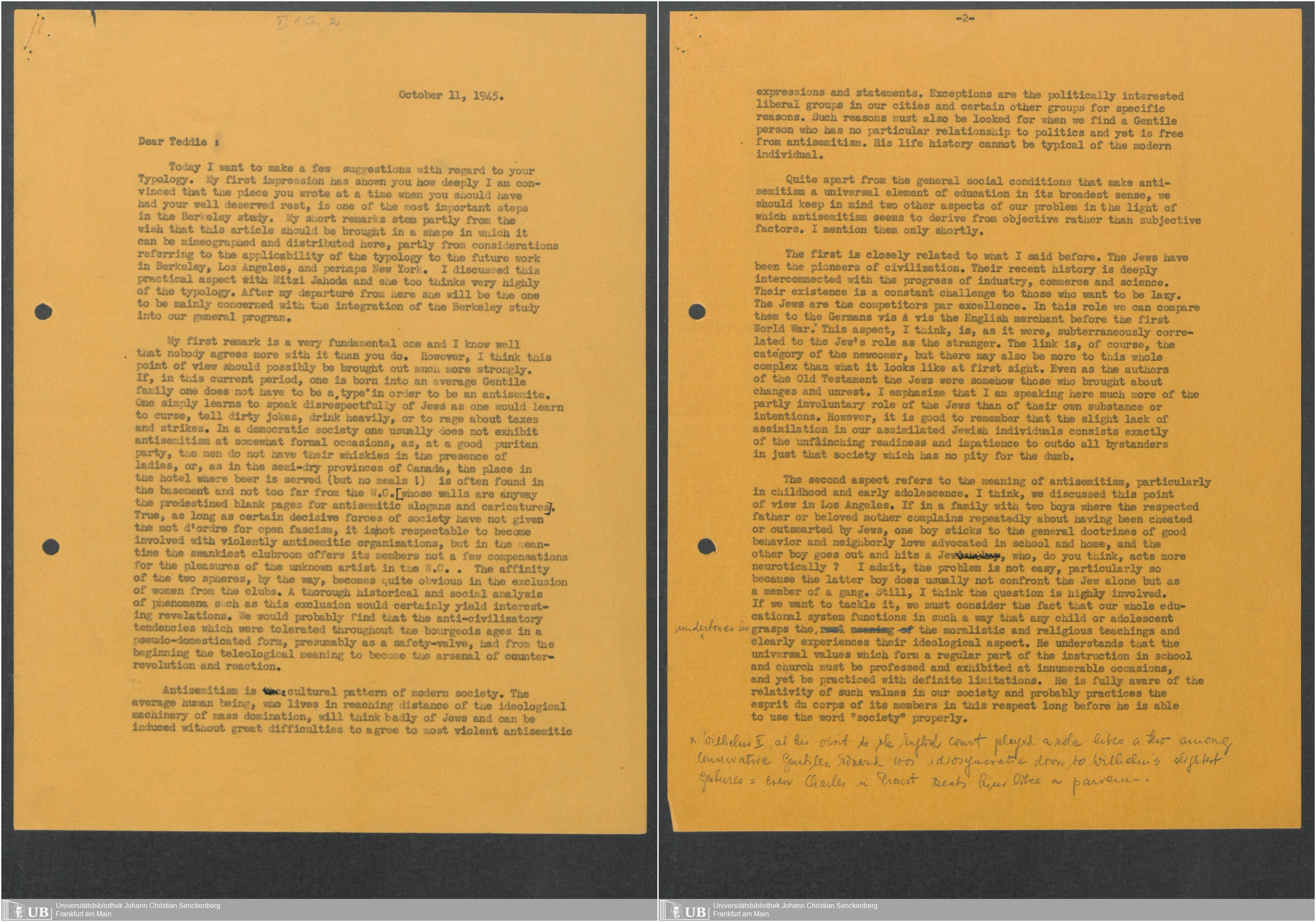 Letter from Max Horkheimer to Theodor W. Adorno (excerpt) from the archives of the Universitätsbibliothek Frankfurt am Main—discussed in context in Chapter 13 of Volume II |
– The reader might assume that this is a selection of the author’s many writings published in English translation, but it appears that this is not a collection but rather a standalone work.
– This is not just a selection from my output of over one hundred older and newer writings here; this is indeed a standalone work, developed within an important theoretical and thematic framework. Not only is all of this logically organized into a coherent whole thematically, but relevance is also a factor, since each section addresses a topic or highlights a central element that remains highly relevant today. It is not a coincidence that the Part analyzing the most current geopolitical and Zionist topics—which also addresses the ongoing war against Iran—is the final one.
A great deal of new material was written for all three volumes, which can only be found here. My earlier pieces, already published on Kuruc.info, which appear in the three volumes, are sometimes faithful to the original, with minimal additions; at other times, however, they have been significantly revised through the incorporation of additional, more recent—or newly discovered archival—source material, or with additions made to meet the broader theoretical demands of the present work.
– One might ponder, since we no longer live in the 19th century or the early 20th century: why is the Jewish theme still relevant? These days, we tend to hear more about “globalists” and “oligarchs,” or about tech giants, “woke” culture (which appears in the discourse as a kind of White “mind virus”), and so on. What makes it interesting for today’s reader for an analysis to focus specifically on the conflict between Jews and Whites?
– The work itself answers this question, as it offers a detailed, in-depth, and—in my opinion—exhaustive documentation and analysis of precisely the process that, to this day, influences the existence and future of Whites to a highly significant degree and in a significant way. By now, so much of this runs on autopilot: we do not need a Jewish academic to advocate gender theory, because a Jewish academic (and of course many others: Butler, Fausto-Sterling, Bornstein, Kessler, Kosofsky Sedgwick, etc.) has already meticulously developed this, so one can point a finger at today’s generation of green-haired, “genderfluid” thirty-year-old professors or YouTube influencers and say, “see, this propagandist isn’t Jewish, either!” Those who seek to obfuscate Jewish responsibility in the normalization of all of this and placing it within theoretical frameworks—perhaps even under legal protection—are quick to point to all sorts of “woke” elements of White or mixed-race origin in connection with various events and movements, but their prominent role is, from the outset, the result of Jewish influence (see Volume II, Chapters 12–14).
The very concept and framework of so-called “transgenderism” were thematized, legalized, and popularized by Jewish pioneers, and we find them at the forefront of this movement even from an endocrinological perspective. Not because such psychosexually handicapped and aberrant individuals would not exist without Jews, but because without Jewish activism, the whole picture would look quite different—just as it did before Jewish influence grew in prominence. Today, however, when it comes to the topic of “trans,” no one thinks of Jews, yet the phenomenon is with us on a daily basis, with its destructive consequences for civilization. My study identifies a vast number of individuals, movements, organizations, and theoretical frameworks that were either created by Jews or conceived from Jewish roots. This is another aspect of group conflict, and we must understand the details so that we do not merely flounder in a flood of slogans and symptoms, but rather swim purposefully toward a goal.
In terms of current events, it suffices to consider that nowadays, the Fidesz camp, as part of the so-called “flag march,” formulated its central slogan (in English) as “No war, no gender, no migration.” Here, “gender” presumably refers to gender theory, which is thus a fundamentally Jewish academic theoretical construct (Part VIII). In the field of migration, the Jewish role is dominant in subversive activism when it comes to the Middle East (Part IX) and racial resistance itself, as well as in activism developing civic, pluralistic frameworks (Part III)—without these, there would be no migrant crisis in Europe today. By opposing “war,” of course, Fidesz does not mean the Zionist genocides and ethnic cleansings in the Middle East (Gaza Strip, West Bank), which it supports, nor the wars and and bombings in the region (Lebanon, Syria, Iran)—even though migration is largely due to these events, just as the 2015 migrant crisis was triggered by the subversion of Syria (which was joined by other economic migrants who saw that the door was open). But even in the case of the Ukraine/NATO–Russia war, which Fidesz opposes here, there is a Jewish thread running through it—such as behind American Zionist influence, from the Kagans and Nulands, through the Blinkens, all the way to Zelensky and others.
This Fidesz event is merely a current example of how the significant or dominant Jewish thread underlying the phenomena they otherwise widely oppose is invisible and unmentionable, but without this root, there would be no “phenomenon,” or it would look different (for example, the Ukrainian–Russian conflict would exist even without Jews, but not in its present form). Each section highlights something that makes the topic pulsatingly relevant even in the 2020s: from migration through the cultural and academic domains to Christian Zionism—the latter, for example, has once again become a widely discussed, and often criticized, topic in recent years. An understanding of the Jewish nature of all these issues is indispensable.
– As you pointed out, the ethnic (race realist) perspective that forms the basis of the study can also be approached from the standpoint of relevance, since these conflicts are becoming increasingly pronounced in an increasingly racially mixed West. What else should the reader know about this aspect of the work?
Part III, which addresses issues of race and migration (included in the first volume that has just been published), is a good example of this, connected to the previous question as well. Not only because migration will remain a relevant issue for a long time to come, but also because of the other elements presented in these two lengthy chapters. One such example is “civic nationalism,” or the social—rather than ethnic—approach to national policy (see also Part IX). This civic conception organizes society on the basis of so-called “shared values,” without placing emphasis on kinship. The serious problems associated with this approach from a nation-preserving perspective are elaborated upon in the text, and this is also a topic that is thematically relevant (due to the prominent role of Jews), but it is also relevant in terms of time, as this continues to define mainstream politics to this day; one might also think here of the earlier Fidesz era (2010–2026), which was fundamentally intended to represent this very approach. Typically, even parties that are supposedly more radical often integrate into this category, since ethnic nationalism is a very strong taboo.
The framework of the civic and ethnorelativist principles analyzed by Horace Kallen, Franz Boas, and Hans Kohn, however, guarantees the development of a racially mixed population, leading to the loss of the nation. Instead of a liberal Hungarian, some might find a patriotic-seeming Gypsy more appealing, but from a national strategic and long-term perspective, that Hungarian’s child, grandchild, great-grandchild, and descendants hundreds of years later will all be Hungarian, whereas the descendants of an “honorable” Gypsy will remain only Gypsies and will not form part of the Hungarian nation, since they are Gypsies. Among the ancestors of Hungarians living today, there were also many liberals, communists, and various “dishonorable” figures, but in accordance with the principle of racial preservation, their present-day descendants are Hungarians.
Moreover, “shared values” change over time, because they can be altered from above by those in positions of influence (a process I document with numerous examples in this study), and the “patriotic” individual of a foreign race who waves the national flag today will tomorrow represent the values of a different flag, but the Hungarian descendant of those who marched under the Bolshevik flag in the 1910s remains Hungarian to this day. A nation—as an organic entity—cannot be sustained by citizens alone if self-determination prevails rather than the foundation of the nation, the natio: shared roots. Our Hungarian word for “nation” (nemzet) presupposes a shared ancestry, a common origin, and does not place the emphasis on self-definition, since that could change with time. Our “sibling” (testvér) is also from our body’s (test) blood (vér). “Shared values” are important, but they are enduring only when based on such foundations.
Moreover, the civic framework raises questions regarding migration, an issue that will remain relevant for a long time to come: if even the “old migrants”—Gypsies and Jews—are part of the nation so long they are decent and consider themselves Hungarian, then perhaps a few million decent individuals could be filtered out from among the world’s hundreds of millions of potential migrants. They could then likewise declare themselves Hungarian—and perhaps even wear the national cockade—thereby solving the problem of Hungary’s low birth rates. Granted, the rapid growth of the Gypsy population also takes care of this, if they, too, are part of the nation. If even Gypsies are Hungarians, then the anti-migrant stance is logically untenable, since, according to the principle of tabula rasa—the “clean slate” at birth—anyone can become Hungarian if even they could.
At the same time, 10 million decent Gypsies (provided they exist) will not constitute a Hungarian nation, just as 10 million Afghans, Somalis, Chinese, Jews, or Arabs will not, no matter how many of them line up under the Hungarian flag to recite the national anthem (setting aside for now the fact that the likelihood of this is slim to begin with, especially in light of genetic similarity theory [see: Rushton, 2005]). Ten million Hungarians would not constitute a Japanese nation if they lived there, because a Hungarian is not Japanese. According to Boas’s principle, a migrant’s character adapts to the group they join; therefore, if a Gypsy person manages to become Hungarian, in theory Somalis could also succeed in becoming English, Swedish, etc.—indeed, if they fail, it is the failure of Whites, because they were unable to integrate them, as we often hear from liberals.
All of this is catastrophic from the perspective of a race realist national self-preservation that seeks to preserve—and, if possible, further improve—a nation’s traditional character. Its ethnic character, which presupposes certain innate qualities and traits, which therefore constitutes a value in and of itself. Rejecting the racial aspect of nationalism and accepting the myths surrounding World War II, such as the Holocaust—that is, the conclusion that the nationalism of White people leads to “gas chambers” and “death factories” and, as such, is inherently evil—now makes one “acceptable.” Whoever, on the other hand, consciously succumbs to lies in order to gain power becomes a liar themselves by the time they get there—if they ever get there at all. Here, of course, retaining power will depend on those who continue to demand submission, and whoever has been willing to submit up to this point will continue so; this element, therefore, persists. One either goes against this framework, or blends into it.
This is merely one example (and a brief one at that), but as can be seen, the analysis remains relevant to this day and will continue to be so for a long time to come, since these are long-term aspects of national and racial existence that are of decisive importance on a civilizational scale. The nine Parts of this study deliberately analyze topics that are of similar importance and must be examined at this group level.
The relevance of all this is further evident in the fact that the Jewish element itself is present here as a group with its own distinct character. To illustrate this, the study turns to the example of the Gypsies as another diaspora group—a people of a very different nature. As I pointed out in an earlier piece (Csonthegyi, 2026), the “Gypsy question” has exhibited the same characteristics for many centuries, because Gypsy behavior has remained the same ever since. This is obviously also true of the “Jewish question,” where the phenomenon similarly stems from their ethnic character.
It is worth mentioning here Heinrich von Wlislocki, a Transylvanian ethnographer who lived among the Gypsies for an extended period and whom the journal of the English Gypsy Lore Society once described as “the man most intimately acquainted with the Gypsies and their national character” (Helmolt, 1908: 193). He is quoted as follows by Géza Endrődy, the police chief of Losonc, in his 1897 book on criminology titled A bűnügyi nyomozás kézikönyve (The Handbook of Criminal Investigation):
The Gypsy’s morals and character are a mixture of uselessness and insolence, of reserve, seriousness, and genuine frivolity; moreover, they are almost entirely lacking in judgment and intelligence, which, as common ignorance, are accompanied by naive cunning and trickery. A base underhandedness is evident in all their actions, as they strive to cunningly deceive others. They are deeply hostile to the truth: they attempt to prove impossible things and lie brazenly and without blushing, for they are completely devoid of any sense of shame. They fear only corporal punishment. In expressing their emotions, they are calculating, cruel, and vengeful. (Quoted in: Endrődy, 1897: 142)
In this regard, Endrődy adds, with reference to Gypsies outside of Transylvania, that “we must also remember their incredible and boundless cowardice” (ibid.; emphasis in the original). Today’s Gypsies have not “conspired” to behave like the Gypsies of the past. Rather than conspiratorial speculation, the influence of genetics on our behavior explains the nature underlying this phenomenon, which spans eras and political systems. It is well known in the relevant literature that our personality traits and psychological predispositions are significantly influenced by genetics, and the “strong heritability of most psychological traits” (Bouchard et al., 1990: 223) will consequently determine our behavior as well—especially at the group level, even if there are exceptions.
The study of identical twins raised apart and together provides an important basis for understanding this, due to their genetic similarity. As Thomas Bouchard and Matthew McGue (1990: 286) pointed out: “the comparable degree of personality similarity between reared-apart and reared-together twins suggests that common familial environmental factors do not have a substantial influence upon adult personality.” Numerous studies have shown that, in their cases, among environmental and genetic influences, “the magnitude of genetic mediation tended to be larger overall” (Markon et al., 2002: 662), but regarding environmental influence, it is also worth noting that “family environmental measures appear to be heritable because personality genes influence the way people shape and recall their rearing environments” (Krueger et al., 2003: 809–810).
As early as the 1970s, researchers observed that “identical twins who were treated alike, dressed alike, played together, spent considerable time together, had the same teacher, and slept in the same room were not more similar in personality and ability than twins who were raised differently,” points out Nancy Segal (2017: Chapter 13), a professor of psychology and director of California State University’s Twin Studies Center. Segal adds that several studies have since replicated these findings, but critics of twin research ignore this: “Clinging to environmentalist perspectives (the nurture part of the nature–nurture equation), these critics fail (even refuse) to acknowledge significant genetic effects on behavior, despite the consistent evidence from twin studies” (ibid.).
Taking into account the psychological and personality-related effects of genetics—that is, those that define the group—my study, in line with the above, is not a conspiratorial analysis but rather a sociobiological one that draws on the findings and conclusions of multiple disciplines to explain the roots of the phenomenon. This is important because simply documenting something is not sufficient in and of itself, especially in the case of a book.
From this perspective, however, the book’s cover is unfortunately not illustrative. On the one hand, aesthetically speaking, a more classical presentation would be suitable for the material (especially in light of the aesthetic perspective laid out in Part IV of Volume II), but on the other hand, the central element of the cover image—the “puppetmaster” pulling the strings—collides with my conclusions, since one of the hallmarks of my several years of work is precisely that the phenomenon historically known as the “Jewish question” is not the result of an (almost religious) mystical force or a (perhaps more secular) conspiracy—processes are not being pulled by strings by mysterious or unknown forces. My analysis runs counter to this approach and draws a more complex, yet at the same time more logical, conclusion, the fundamental element of which is that all these processes (the group conflict referred to in the title and its symptoms) do not manifest in a mystical or hidden way, but rather in a very demonstrable, observable, recognizable, and identifiable form—a fact that the three volumes document extensively, in addition to analyzing it all. All of this becomes clear as one progresses through the work, which uncovers the roots of the conflict—and Jewish influence—in ethnic characteristics, along the lines of natural antagonisms; an entire subchapter is even specifically devoted to this.
In the book’s title, the combination of the words “Jews” and “manipulation” carries a much more nuanced meaning than what the cover image—reminiscent of conspiratorial polemics—might suggest. I outlined to the publisher on several occasions that this “puppetmaster” element partly runs counter to the thesis of my work, but despite having previously received a clear promise that the book would not be published with a cover I did not like, this specific element was not altered. In any case, the book’s interior layout follows the formatting of my manuscript, and as such, it is aesthetically suited to the material. Ultimately, I was able to thoroughly review the most important part of the work—its content, that is, the text itself—before publication, so I can take responsibility for that, even if not for the cover.
– Recently, a topic that has repeatedly surfaced on the Hungarian political scene is the issue of state subsidies under the Fidesz government, which have also been generously awarded to anti-national elements. With a touch of sarcasm: what kind of funding produced this monumental work that has garnered international attention?
– The entire work was created without any funding whatsoever and is the result of solely my effort. (And since nowadays books generated by artificial intelligence are not unheard of, it is worth noting for posterity that generative AI played no role whatsoever in this work.)
One of the first steps taken by the Fidesz government in 2010 was to enact legislation criminalizing “Holocaust denial” (Btk. § 333 and § 269/C), which is why this work cannot be published in Hungary. Although the material was written in a measured tone and academic style, in addition to the above law, the crime of incitement against a community (Btk. § 332) may also be relevant; an aggressive legal team might successfully invoke this charge in any potential proceedings regarding my work, especially if we consider aggressive groups—backed by Fidesz—such as EMIH and TEV, who have already taken action against Kuruc.info (in which Fidesz also played a role). Instead of support, creative endeavors like mine are more likely to face persecution, suppression, and censorship.
I am not saying this to generate pity, because creating a work like this with empty pockets brings a special kind of pride, but—again, for posterity—it may be worth placing this situation into context. For example, under the Fidesz government, the National Scientific Research Basic Programs (OTKA; now known as the National Research, Development, and Innovation Office [NKFIH]) funded the projects of lesbian pro-deviant advocacy group Labrisz’s leading figure, the psychoanalytic deviant Anna Borgos, and Ferenc Erős—the latter a prominent academic representative of Hungarian psychoanalysis and neoliberalism for decades. The projects carried out between 2014 and 2017 (grant code: K 109148) and then between 2018 and 2024 (K 124192) implemented several comprehensive programs in line with their principles of normalizing deviance as well as other easily predictable tenets, resulting in the publication of numerous books and research materials, including the content of the journal Imágó Budapest, which, under the guise of academia, promotes everything that Fidesz’s system, the NER, theoretically opposed, thereby providing high-prestige ammunition to the representatives of corrosive forces.
According to the report of the Hungarian Academy of Sciences, the total amount for Project K 124192 was 21,993,000 forints (see here, p. 207), while the total amount for Project K 109148 was 13,971,000 forints, meaning nearly 36 million ($111,348) went to the oppressed and marginalized for just these two projects under the oppressive Fidesz government—under whose rule it was rather I and those like me who were forced to use pseudonyms. All of this will apparently remain the same even under the Tisza government, which is even more favorable to the Borgos crowd, while they are now free to indoctrinate elementary schoolchildren with their theories that erode civilization.
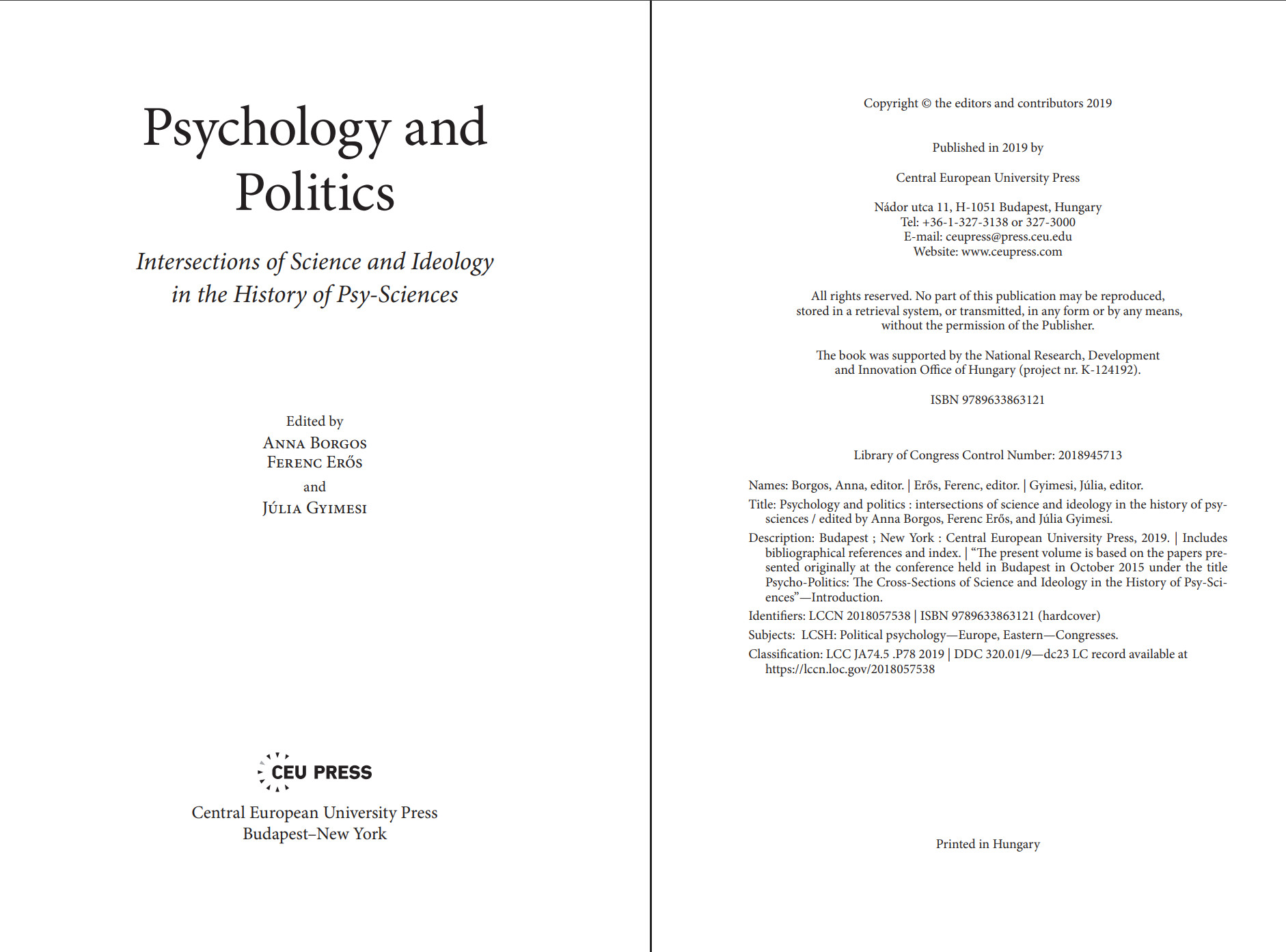 A psychoanalytic book published by the Soros-affiliated CEU, the Central European University Press, which promotes typical neoliberal viewpoints through historical analyses and was published as one of the outcomes of the OTKA (NKFIH) research grant with identification code K 124192 |
But we can also take, as an example, the EU- and state-funded journal Szellem és Tudomány (Spirit and Science), in which János Rada’s article, titled “The Coexistence of Roma and Non-Roma in Hungarian History,” specifically highlights that his work “was co-financed by the European Social Fund and the Hungarian state budget” (Rada, 2018: 186, note 1). From this we learn regarding the Gypsy–Hungarian conflict that “within the ranks of the majority society a prejudiced attitude—even if latent—largely persists even later, during more peaceful periods of coexistence, one that keeps the Gypsy minority in the lower strata of society,” and that Hungarians are also responsible for the marginalized status of Gypsies due to “stereotypes that remain stigmatizing to this day and hinder their social integration” (ibid.: 190). While MP Előd Novák was fined five million forints in 2023 by the Speaker of the House from Fidesz for using the term “Gypsy crime,” we received academic materials—courtesy of the state—that blame Hungarians and whitewash Gypsies.
To stay with Kuruc.info, it is also worth mentioning here the 2019 study by ELTE sociologists Ildikó Barna and Árpád Knap, which set out to examine contemporary anti-Semitism. This study was carried out with funding from the Ministry of Human Resources, and it cites several Kuruc.info articles, though without naming the authors. The superficial analysis does not warrant a lengthy response, but by way of illustration, it is worth pointing out here that, according to the authors, it is “conspiratorial” that Kuruc.info articles “portray Jews, for example, as ‘homopropagandists’ or ‘deviant propagandists.’ According to articles published on this topic, Pride parades in general—and Budapest Pride in particular—are financed by ‘Jewish money’” (Barna & Knap, 2019: 84).
To keep our focus solely on the Hungarian context, this is not merely some anti-Semitic accusation, but a fact acknowledged even by Péter Hanzli, one of the main organizers of the so-called “Budapest Pride.” As he stated in 2015: “Our most significant supporter is the Open Society Foundations.” Recently, it was revealed that the group Emberség Erejével, which holds educational sessions for second- and third-grade students that undermine sex-based identities and normalize deviancies, received $2.3 million in grants from the foundation of George Soros, chaired now by his son, Alexander (Kárpáti, 2026). Although there has been some outrage over the latter, the word “Jewish” never came up. Whenever any reference is made to Soros’s origins, he is typically described as “Hungarian”—despite the fact that his Jewish identity is widely known to be a driving force behind his fight for “open societies” (See Csonthegyi, 2023; explored in Volume II, Chapter 13).
In a revealing move regarding Barna and Knap’s piece, they quote—in quotation marks—from one of my writings in their analysis, stating that, according to my writing, “an ancient hatred of the Christian order” motivates Jews regarding their role in pornography; however, I do not write anything of the sort in the cited study, so it is unclear where this quote comes from. Presumably, they got their source materials mixed up, because this is more reminiscent of the words of the prominent American Jewish pornographer Al Goldstein, whom I quoted in another 2016 piece of mine (Csonthegyi, 2016), and who himself pointed to contempt for Christianity as a Jewish motivation within pornography (the same article also quotes Jewish scholar Nathan Abrams, who himself pointed this out). Thus, public funds were spent under the Fidesz government on such sloppy and inaccurate analyses—which nevertheless served the purpose of providing a “scientific” basis for the fight against anti-Semitism. Other examples could also be found, such as when the government spent 27 million forints in 2017 on the republication of two books by the Jewish literary historian Tamás Ungvári.
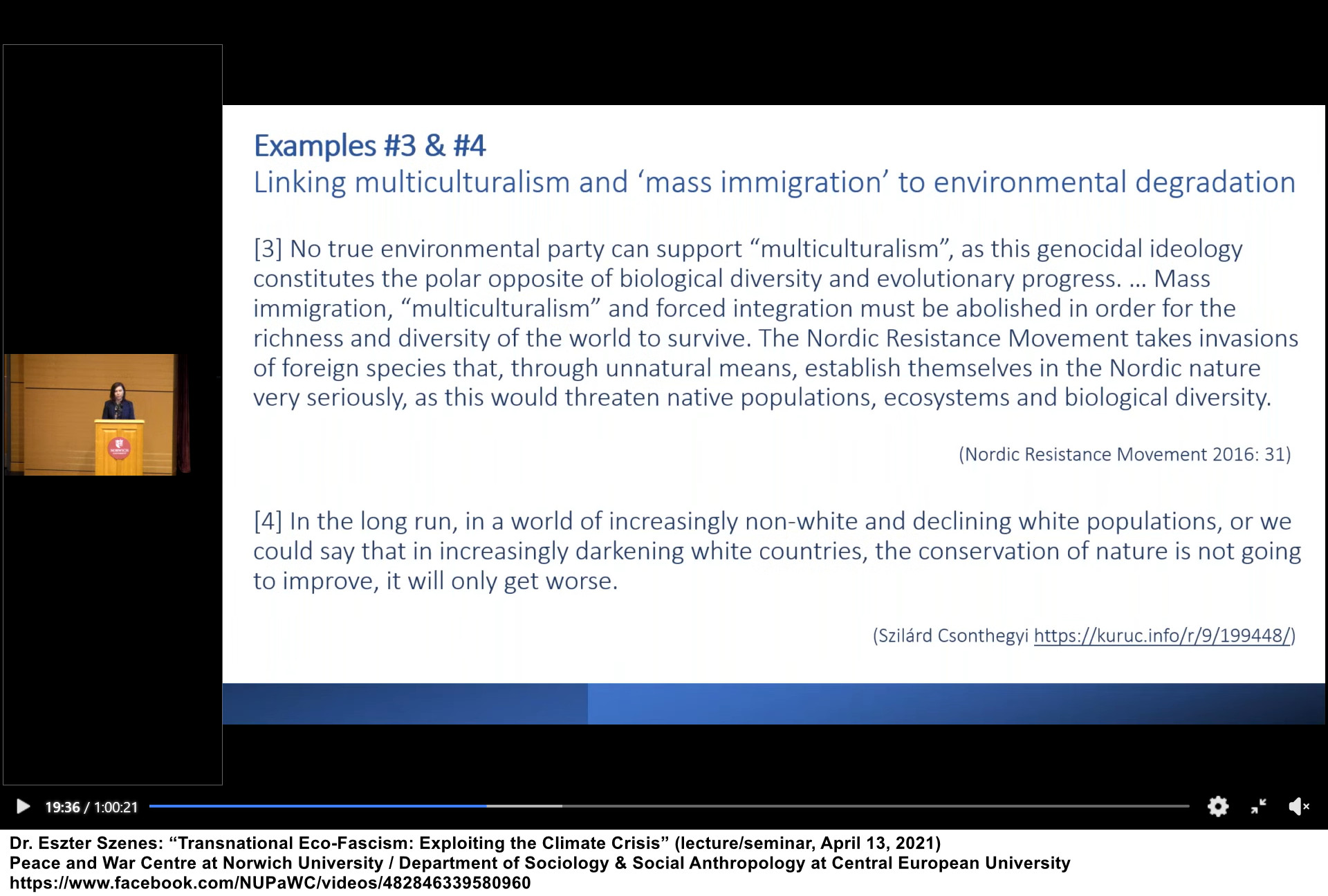 This is not the first time Csonthegyi’s work has received international attention. In the picture, academic Eszter Szenes—known from Australia to the United States—presents her research (later published by the International Centre for Counter-Terrorism [ICCT] as a superficial study) on April 13, 2021, under the title “Transnational Eco-Fascism: Exploiting the Climate Crisis” (Peace and War Centre at Norwich University / Department of Sociology & Social Anthropology at Central European University) |
– Why are books still necessary in an age when short Facebook, YouTube, and TikTok videos generate tens of thousands, hundreds of thousands, and sometimes even millions of views?
– The importance of in-depth understanding should not be neglected in favor of broader impact; the two can coexist. Short-form content (memes, talking points) can be important, as it reaches the masses more effectively and can also shape cultural or political frameworks more powerfully. We have seen the role of all these elements in the transformation of White nations—something I illustrate here and there in the book. However, these typically stem from longer, deeper analyses, so even though I understand that my writing is of interest only to a specific segment of the audience, I feel it has a role to play within the bigger picture. In my study, for example, I use numerous examples to demonstrate in detail how Jewish intellectual and academic activism exerted influence “top-down”—primarily through the help of their peers already established in the media and press, who broke down these often complex psychological and theoretical foundations into digestible parts and disseminated them in cultural doses.
This is how the psychoanalytic tradition of Sigmund Freud, Sándor Ferenczi, or Wilhelm Reich exerted its influence in the realms of sexuality and culture, or—on similar grounds—the Frankfurt School regarding White attitudes; but we can see this in the case of feminism as well, whose theoretical aspects few have explored in detail, while its “memes” and clichés have spread. Today, for example, we can see this in the field of “genderism,” which has extensive theoretical and academic foundations, regardless of the fact that most rainbow-flag-wavers are only armed with memes and tropes in this specific cultural (and intellectual) battle. I also discuss this in the section titled “The Importance of Repetition and Clarity” in the book’s introduction.
– Beyond the work’s fundamental values, what might be of particular interest to a Hungarian audience in this trilogy? Or, to put it differently: what elements might be of special interest to Hungarian and international audiences, either separately or together?
– In this study, Hungary serves as a so-called comparative external validation tool, where the term “external” refers to the fact that it functions as an independent replication cohort. Scientific research typically uses control groups and comparative subjects to demonstrate, for example, that a phenomenon can be replicated in other contexts (meaning that the phenomena are not necessarily the result of a specific language, culture, or other external influences). Hungary’s history offers a rich repository of Jewish influence, so all of this serves a comparative purpose, demonstrating that the same elements of Jewish behavior appear even outside the English-speaking world or the Western, Western European (or possibly more Eastern, Slavic) cultural sphere—even in a small country with a strange language and a partly different political and cultural system. All of this can be observed in a similarly diverse range of historical and religious contexts, a point that is, of course, thoroughly explored in the material.
Among other examples, Chapter 16 in Part VII is worth mentioning, which discusses the topic of the Holocaust—or, more precisely, the Jewish mechanisms of influence based on the Holocaust—and it includes a case study detailing the history of Hungary’s so-called “one-day gas chamber.” This alleged gas chamber, built near Kőszeg and supposedly used for a single day, may be a refreshing read to the Hungarian audience in this well-organized and Jewish-critical form, but it is especially significant for the international revisionist camp, where this is essentially unknown. Germar Rudolf’s voluminous Holocaust Encyclopedia makes no mention of it. It would be worth including, however, because Kőszeg is a particularly characteristic microcosm of Auschwitz and other places that have now become mythical.
This comparative nature, therefore, may be of interest to both Hungarian and international readers, especially since Part VIII offers perhaps the most comprehensive Jewish-critical analysis to date of the first wave of feminism in Hungary. We encounter a similar case in the history of Hungarian psychoanalysis, which brings to light the Jewish element in Freudian thought observable elsewhere—and perhaps takes it a step further, led by the pioneering Sándor Ferenczi. The so-called Budapest School of psychoanalysis, epitomized by Ferenczi, was even more Jewish in terms of numbers than, for example, Sigmund Freud’s Viennese circle, which lent it a predictable character—which is the truly important aspect here. Chapters 12 and 13 of Part V of Volume II deal with this topic, drawing on many exclusive archival documents and overlooked academic materials. In Part IX and the afterword, Hungary’s relationship with Christian Zionism within its international context is once again fascinating, as is the role Jews played in our cultural history, as discussed in Part IV.
The three volumes offer an international analysis, but in the course of this, a slice of Hungarian history—and the Jewish role played within this—emerges in nearly every topic examined in depth, and is compared to the international Jewish role, thereby highlighting its corrosive and subversive nature. This pattern can thus be replicated in an academic context in other cultural, political, linguistic, and religious environments as well—the central element remains the Jewish character.
Details:
Szilárd Csonthegyi, Warfare Through Manipulation: Group Conflict Between Jews and Gentiles. Volume I. Foundations and Strategies. Antelope Hill Publishing, 2026. pp. xxxviii + 530. Foreword by Kevin MacDonald. ISBN: 979-8-89252-078-2.
The book's official page:
https://antelopehillpublishing.com/product/warfare-through-manipulation-volume-i-foundations-and-strategies-by-szilard-csonthegyi/
https://antelopehillpublishing.com/product/warfare-through-manipulation-volume-i-foundations-and-strategies-by-szilard-csonthegyi/
Amazon (for those in Europe):
(Soon)
(Soon)
Citations:
• Barna, Ildikó & Knap Árpád. 2018. “Antisemitism in Contemporary Hungary: Exploring Topics of Antisemitism in the Far-Right Media Using Natural Language Processing.” Theo-Web. Zeitschrift für Religionspädagogik Vol. 18, No. 1: 75–92.
• Bouchard, Thomas J. & Matthew McGue. 1990. “Genetic and Rearing Environmental Influences on Adult Personality: An Analysis of Adopted Twins Reared Apart.” Journal of Personality Vol. 58, No. 1: 263–292.
• Bouchard, Thomas J.; David T. Lykken, McGue Matthew, Nancy L. Segal & Auke Tellegen. 1990. “Sources of Human Psychological Differences: The Minnesota Study of Twins Reared Apart.” Science Vol. 250, No. 4978: 223–228.
• Csonthegyi, Szilárd. 2016. “A pornográfia mint zsidó eszköz – fehérgyalázás, prostitúció és az európai erkölcsiség elleni perverz harc.” Kuruc.info (September 26, 2016).
• Csonthegyi, Szilárd. 2019. “Magyar-e a cigány.” Kuruc.info (February 18, 2019).
• Csonthegyi, Szilárd. 2023. “A ‘woke’ kialakulása (III. rész): fehérellenesség mint zsidóvédelmi stratégia – Popper, Soros, és az új hierarchia a normalitás ellen.” Kuruc.info (April 29, 2023).
• Csonthegyi, Szilárd. 2026. “A ‘cigány holokauszt’ története és mai vetületei: tabuk és tények.” Kuruc.info (August 18, 2026).
• Endrődy, Géza. 1897. A bűnügyi nyomozás kézikönyve. Kármán.
• Helmolt, Hans F. 1908. “A Friend of the Gypsies.” In: Journal of the Gypsy Lore Society: New Series. Volume 1 (July 1907–April 1908). (193–197) Gypsy Lore Society.
• Kárpáti, András. 2026. “Ők pénzelik az iskolákban is érzékenyítő pécsi alapítványt.” Magyar Nemzet (October 17, 2026).
• Krueger, Robert F.; Kristian E. Markon, Thomas J. Bouchard, Jr. 2003. “The Extended Genotype: The Heritability of Personality Accounts for the Heritability of Recalled Family Environments in Twins Reared Apart.” Journal of Personality Vol. 71, No. 5: 809–833.
• Markon, Kristian E.; Robert F. Krueger, Thomas J. Bouchard, Irving I. Gottesman. 2002. “Normal and Abnormal Personality Traits: Evidence for Genetic and Environmental Relationships in the Minnesota Study of Twins Reared Apart.” Journal of Personality Vol. 70, No. 5: 661–694.
• Rada, János. 2018. “Romák és nem-romák együttélése a magyar történelemben.” Szellem és Tudomány Vol. 9, No. 1: 186–197.
• Rushton, Philippe. 2005. “Ethnic Nationalism, Evolutionary Psychology and Genetic Similarity Theory.” Nations and Nationalism Vol. 11, No. 4: 489–507.
• Segal, Nancy L. 2017. Twin Mythconceptions: False Beliefs, Fables, and Facts about Twins. Academic Press.